Site of the Fort Sumter Saloon, at corner of Third and Laurel Street's, so-named the day after the firing on Fort Sumter near Charleston, S. Carolina.

READS: According to local tradition Charles Weick (sic) named the newly purchased saloon the day after Fort Sumter was fired on, 1861, and put the cannon out front for atmosphere. It was one of the city's most popular saloons until prohibition. [end]
FROM A CORP OF ENGINEERS PUBLICATION: Tradition says that a new tavern opened on the corner of Third and Main streets in Baton Rouge the day after the Civil War began. Known as the Fort Sumter Saloon (for the first military engagement of the war), it eventually moved to Third and Laurel, where it remained a popular local institution until National Prohibition (of alcoholic beverages) began in 1918. Source
Born August 9th, 1866,
Mr. Wiech was a native of Baton Rouge.
He was of German decent, 1st generation American.
Master of St. James Lodge No. 47 in 1896
Mr. Wiech was a native of Baton Rouge.
He was of German decent, 1st generation American.
Master of St. James Lodge No. 47 in 1896
Of Mr. Charles Wieck's Father:
He was a staunch supporter of the cause of the democratic party, and his civic loyalty was shown in a service of several years as a member of the City Council. He and his wife were zealous members of the First Presbyterian Church, and he was prominently identified with the Masonic fraternity... Source
He was a staunch supporter of the cause of the democratic party, and his civic loyalty was shown in a service of several years as a member of the City Council. He and his wife were zealous members of the First Presbyterian Church, and he was prominently identified with the Masonic fraternity... Source

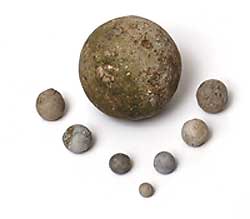
On Third and Laurel Street's, I found this cannon that may have been the one that was placed outside of the Fort Sumter Saloon (as decor) in 1861 (refer to sign above), beside the cannon is, what I believe to be, a "grapeshot" cannonball.
It has been supposed that the canon was from the old Spanish fort originally, the City Fathers placed the cannon there to keep vehicles off one of the few adequate sidewalks in the town. In 1969, street repairs required the reburying of the cannon, muzzle down, at the same corner. Source
Cannon ends had a protruding object ending with a ball on the end (as below pic), called a "cascabel knob" or "button", the cannon embedded in the sidewalk downtown had the button cut off possibly for safety reason.


Blog Email:
No comments:
Post a Comment
Comments must meet my approval before they are published on the site.
Comments with a political or racial agenda (any racism) with be rejected, this is about history, the good, the bad, and the ugly, but if something drives you other than facts about history you will never get on my site.
Comments are reviewed before they are published on blog, approved comments are generally published the same day.
[Spammers your efforts to get your SPAM on my blog are futile, you will be rejected.]
Please, do not use a comment to make an inquiry, I have a mail form for that and only I will read it, I can not reply without your Email address (only I will see it.)